

Welcome to the October edition of BlockchainGamer.biz’s regular Mavens group. This month we asked:
What’s been the most prominent shift in web3 gaming in 2025?
Hilmar Veigar Pétursson, CEO, CCP Games

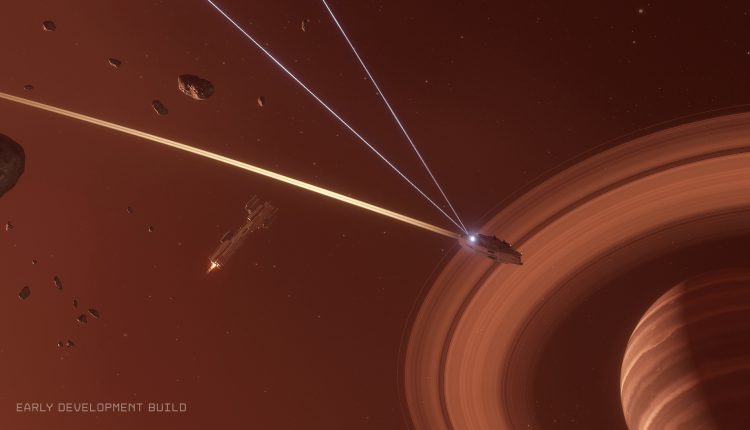
This year, we’re seeing the first real glimpse of how blockchains can evolve from financial infrastructure into a creative substrate for game development itself. With EVE Frontier, we have quickly noticed the immense power we are unlocking with the modding platform we built on top of the smart contract capabilities of blockchains.
It’s pretty magical to see players extend and add new capabilities into the game experience for everyone to enjoy, without any permission from us. This is what blockchain truly presents. It is an absolutely unique value proposition – never before has there been an MMO that existed where you can mod the server!
Since the beginning, our guiding light has been to focus on making a great gaming experience. We have chosen the space survival genre, which is a great opportunity to take decades of our learnings from EVE Online and bring them into a fresh new take on a space game from CCP.
Christina Macedo, CEO, PLAY Network

Game first. Revenue second. Token third. That’s the mantra reshaping web3 gaming in 2025, and it’s been the most influential shift of the year.
Teams are now obsessed (finally) with the game itself: the core loop, retention funnel, user acquisition, distribution channels, and payment conversions. Even ad monetization is being reimagined as part of the design toolkit. Only after achieving game-market fit do teams now turn to their token strategy, using it to enhance player and community experience rather than define it. This evolution restores the soul of gaming.
Games must be fun. Games must be engaging. Games must entertain. Only then will players care, and only then will they spend. This reorientation sets the stage for 2026 to be the year of the GAME. Building for tomorrow’s web isn’t about starting from scratch; it’s about leveling up what already works. With AI and blockchain as exponential power-ups, the next generation of games will blur the line between technology and pure play : and that’s what excites me most.
Gabby Dizon, co-founder, Yield Guild Games

These past several years, the big goal of the industry was to have a triple-A web3 game that would hit the mainstream. We’ve had a few popular ones among web3 gamers, but they haven’t gained traction with web2 players.
The real opportunity for web3 games is in the casual genre — low-commitment, rewarding gameplay that brings everyone together, from the gamers to the degens to the moms playing Candy Crush. So we came up with Casual Degen.
- Casual – meaning anyone can play it
- Degen – for the crypto crowd who want crypto-native experiences
For them, it’s the crypto elements that make the game fun. Our flagship game LOL Land was built specifically for crypto degens. In two months after launch, it had already made more money than it cost to build, and in five months we’d crossed $5 million in lifetime revenue, which is a huge signal that the model is working.
This is really promising because most web3 games haven’t got anywhere close to proving out retention and recurring revenue, let alone profitability. It’s easy to build hype but much harder to build something people will actually spend money on.
Rebecca Liao, CEO, Saga

In 2025, we’ve seen two major shifts in gaming that are really redefining the space.
The first is that AI has quietly become one of the biggest forces reshaping web3 games this year. Developers are using AI to generate richer worlds, smarter NPCs, and more adaptive economies. We’re seeing AI both enhance gameplay and streamline game development and player onboarding. The convergence of AI and web3 is creating experiences that are more dynamic, personalized, and economically sustainable than anything we’ve seen before.
That said, another interesting shift we have seen is the ‘web3 gaming’ moniker falling by the wayside. Developers are no longer leading with the technology from a promotional standpoint. Instead, they’re focused on building great games with blockchain woven quietly into the background to enable things like ownership, interoperability, and player-driven economies. It’s becoming less about being a ‘web3 game’ and more about being a great game that happens to use web3 under the hood, and that’s not a bad thing.
David Bolger, head of gaming and consumer partnerships, Offchain Labs

In 2025, the most prominent shift in web3 gaming has been the widespread commitment to a web2-like user experience (UX). Every major build now places social logins and wallet abstraction at the forefront, effectively eliminating the need for users to ‘bring their own wallet’ or manage complex seed phrases for basic gameplay.
This simplified onboarding is primarily enabled by gaming focussed developer toolkits, also allowing developers to sponsor gas fees for players, completely removing the initial crypto-friction barrier. This focus on seamless UX signals the industry’s pivot toward attracting a mainstream, non-crypto-native audience.
Philosophically, this is paired with the ‘Gameplay First’ movement, where studios prioritize fun, high-quality game design over speculation, treating the web3 elements (like verifiable asset ownership) as an enhancement rather than the core incentive.
Jason Lim, director of games, Sei Development Foundation

With interest and capital moving to sectors such as artificial intelligence (AI), web3 game developers are starting to pivot game development and narrative of their game loops with AI, enhancing gameplay for realistic NPCs, adaptive difficulty, and personalized experiences to keep up with the evolution of AI.
Anthony Palma, head of gaming partnerships, Mysten Labs

2025 has become the year of consolidation, which brings with it both good and bad. Overall, the industry is moving past the speculative phase, with the market placing significantly more focus on gameplay depth and sustainability as opposed to hype and projections.
While the opportunity for web3-powered titles continued to trend positively, this year saw large swaths of shuttered projects – over 300 since the start of 2025, with even highly funded projects ultimately choosing to pull the plug.
This is mostly due to a continued emphasis on triple-A quality – what many see as the only way to bring about mass adoption for gaming onchain. It is now projected that most triple-A PC/console titles will cost over $200 million to create and publish, pricing smaller teams out of the market entirely, particularly from an investment perspective. And for mobile, developers are still dealing with tricky platform constraints for blockchain integration alongside post-IDFA user acquisition challenges to reach mass scale
With that said, it’s not all bad news – as previously mentioned, investments into web3-enabled gaming continue to flow in and the overall sector has trended upwards in terms of growth and potential over the course of the year.
Mysten Labs will continue to be a major contributor to the sector during this time, and will continue this push for triple-A quality with highly anticipated titles like EVE Frontier that plan to take full advantage of web3 infrastructure for gaming.
Sam Barberie, head of strategy and partnerships, Sequence

Out with the chaff. 2025 continued the consolidation of the web3 games market across a number of fronts: chains, games, tokens, investors. For the most part, I view this as a positive trend. The past few years were ruled by dumb money, distracting and misguided ICOs, chain confusion and fragmentation, and — frankly — too many people making games who didn’t have the ability to pull it off.
Gaming is a tough business regardless of what database you’re using, and the experiments of previous years led to unfortunate false starts and inaccurate playbooks; fortunately, 2025 has continued to whittle down the market to one that is more easily navigable. With that comes greater chance of success for games, more opportunities to prove the PMF, more chances to entice investors. Troughs of disillusionment can be helpful.
We’ve seen real successes come to market in 2025. TapNation integrated web3 components into existing, casual, web2 games and saw the kinds of retention, conversion, and monetization boosts we’d all want to see as showcasing the benefits of the blockchain.
Off the Grid continued its stabilized rollout, reminding us that even core console and PC games have potential in web3. Studios continued measured, opt-in, secondary applications of web3 like Distinct Possibility’s Reaper Actual.
There’s also a marked shift in the acceptance and adoption of crypto. Embrace of stablecoins by the larger web3 market this year — as well as traditional financial institutions — mean that consumer spending power is increasingly moving onchain. Developers of all kinds want to access any available payment option to increase spend, and stablecoins reduce the noise and instability of gaming economies. Traditional game publishers are taking note, and thinking about what alternative payment methods their existing portfolios can leverage.
Even though 2025 spelled the end for many teams and companies trying in earnest to prove web3 gaming’s potential, the seriousness of current projects, and the optimism surrounding the adoption in the macro market present a notable reorganization of the web3 gaming landscape.
Chris Heatherly, ex-CEO Great Big Beautiful Tomorrow

2025 is the year the game token speculation meta well and truly died. 96% of game tokens have failed. Clearly the play-to-earn model as conceived doesn’t work. What the market wanted was to “trade attention” but the reality is that memecoins were – and now prediction markets are – a better vehicle of that.
The crypto game of the year is Polymarket, and that’s a real bitter pill for a lot of game makers to swallow.
There’s some hope. LOL Land and Gigaverse have done $4-5m this year so there’s some hope of recovery, but it’s not clear how much more these games can grow. The reality remains that we have a small crowd of web3 gamers which limits the size of any success. I’m much more bullish on what Mythical is doing because they are launching games to a larger audience on mobile. NFL Rivals has done over $10m, and I’ll be curious to see if Pudgy Party can get any scale.
My take on this space really doesn’t changes – we need to focus on scale with regular users or it’s just a niche. And that may be okay for smaller devs, but it won’t attract much investment or top devs.
Jack O’Holleran, CEO, SKALE Labs

The most prominent shift in 2025 has been developers finally putting gameplay before tokenomics.
For years, web3 gaming was dominated by projects that launched tokens first and asked questions about fun later. That era is dead. The games gaining real traction now are the ones that made blockchain invisible and focused on building experiences players actually want.
This shift is forcing the entire ecosystem to mature. Infrastructure providers, investors, and studios are all realizing that sustainable gaming revenue comes from engaged players, not speculative token launches. Gas-free transactions, seamless onboarding, and real utility are no longer nice-to-haves. They’re table stakes.
The winners in this new landscape won’t be the projects with the flashiest token launches or the most L3s. They’ll be the ones delivering quality experiences where blockchain enhances gameplay instead of defining it. Quality over hype. Fundamentals over vibes. That’s the shift that will define web3 gaming’s future.”
Check out our other recent Mavens questions below:
Comments are closed.