

Fenris Creations has completed the open source release of Carbon, the game engine framework behind EVE Online and the upcoming EVE Frontier.
Carbon is the technology that has supported EVE Online’s single-shard universe for more than 20 years, including its record-breaking battles involving thousands of concurrent players.
The release follows the announcement that its Trinity rendering engine had been open sourced. The full technology stack now covers more than two dozen Carbon modules, including Destiny, its physics simulation and pathfinding system, and Trinity. Other parts of the framework cover networking, UI, audio, resource management, scripting, scheduling, and the tools required to operate large online worlds.
“Carbon was built for a very specific purpose: to support living virtual worlds that can endure for decades,” said senior development director for core technology Ben Hunter.
“Open sourcing Carbon is about making that foundation visible, understandable, and useful to others. It is a commitment to transparency, longevity, and the belief that the next generation of persistent worlds will be stronger when more people can study, challenge, and build on the technology beneath them.”
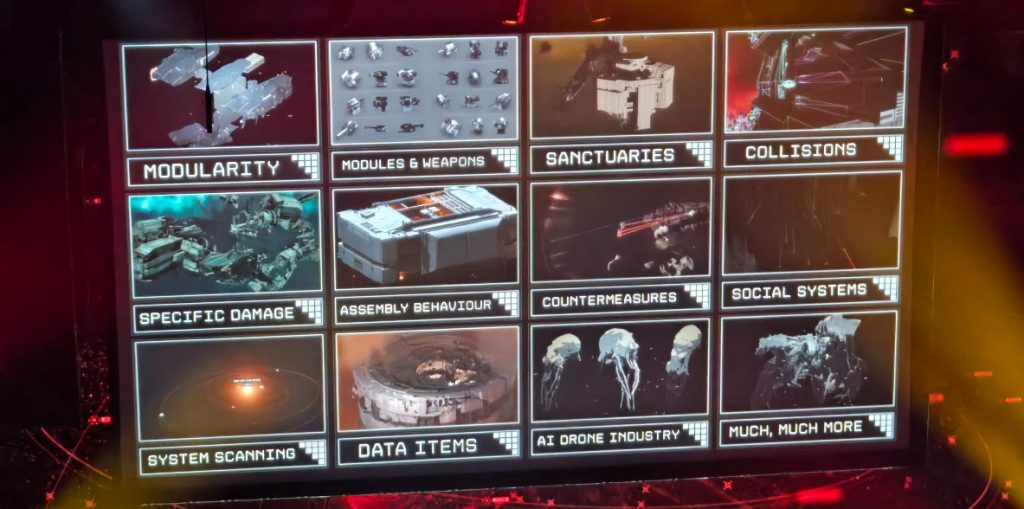
Of course, the most interesting angle is what this means for EVE Frontier.
It’s being positioned as a hardcore space survival MMO built around freedom, consequence, and long-term player agency. For that vision to work, Fenris needs more than strong internal technology. It needs a foundation that third party builders can inspect, understand, extend, and eventually trust.
That is why making Carbon open source is key to the vision. Its release pushes EVE’s long history of player collaboration deeper into the technical layer. EVE Online players have always built around the game, whether through corporation tools, market analysis, logistics systems, public APIs, and alliance infrastructure. Fully opening Carbon highlights that Fenris wants this culture to encompass the entire technology.
This is especially important for EVE Frontier because the game’s pitch depends on players doing more than consuming content. If Frontier is to become a moddable, player-shaped virtual world, then developers and technically minded players need access to the systems underneath it.
Open technology makes it easier for them to build tools, understand how the world works, and potentially contribute improvements over time.
It also reinforces the idea of longevity. Persistent worlds are hard to maintain because they are not products that simply launch and finish. They evolve over years, sometimes decades. By opening Carbon, Fenris is making a statement that the infrastructure behind its worlds should not be a black box controlled only by the studio.
It does not automatically make EVE Frontier successful, though. Open source is not a substitute for good game design, onboarding, balance, or player demand. But it does make the project more credible. If Fenris wants EVE Frontier to become a living world shaped by builders, then opening the technology behind that world is a necessary first step.
EVE Frontier is now available to play in its Cycle 6. You can find out more about Carbon here.
Comments are closed.