


In the latest episode of the Blockchain Gaming World podcast, editor-in-chief Jon Jordan talks to Xsolla president Chris Hewish about the games payment company’s vision for blockchain.
Its Xsolla ZK Ethereum-based L2 blockchain is now live, as is its XLA gas token. The goal, Hewish explains, is to provide a simple platform that enables developers using its technology to easily create quests and other engagement mechanisms to reward players with digital assets they can collect and potentially use in games.
Can you tell us about Xsolla and what you’ve just announced?
Chris Hewish: We’ve been in business for nearly 22 years, providing the things game companies need to succeed: to launch, grow and scale their games. We see a great opportunity to continue helping our partners, so we’ve launched Xsolla ZK and we’re introducing Xsolla Gas (XLA), the native gas token for that blockchain.
We believe there’s an opportunity for players who want more from the games and brands they follow, and developers who want more ways to engage players. There’s a real benefit in giving players more ways to use digital items beyond cosmetics.
The way to do that is to bring digital items onchain, launch a blockchain and fuel it with a utility gas token. Players receive digital items in what we call the Xsolla Backpack. It stores items they can transfer, trade and carry from game to game, if those games support them, alongside their existing web2 digital items. This opens up a new world of portability for players, allowing them to keep items from the games they love. It also lets developers and brands engage with players more directly. We’ve just launched it, and the news is coming out this week.
Why have you stuck with blockchain when so many other companies have lost interest?
It begins with having a network that can actually use this. There were conceptually similar attempts in the past that didn’t work out. From my point of view, that’s because people were trying to build two things at the same time.
They were building the technology that allowed players to store and keep items, trade and gift them to other players, and have interoperability between games. At the same time, they were trying to build a network or market for it. They built the functionality, but then they also had to build the games that could use it. It was very much focused on a purely web3 audience and ecosystem.
We’ve spent the past 22 years building a network of over 1,500 game teams and thousands of games. We work with more than 70% of the top 100 highest-grossing games worldwide, across 200 geographies and all these different payment methods. We’re not entering the market as a startup trying to find demand. We already have the demand side in hand.
Now we’re introducing functionality that happens to be powered by web3. We can bring it to the billions of gamers we’re already connected with and give them new capabilities to work with what they already have.
Nobody needs to install anything new. There are no web3-specific SDKs to download and install. This comes as part of what you already have. Gamers get an ID and a backpack they can log into. They don’t need seed phrases or the complicated things they needed before, so some of that friction is removed.
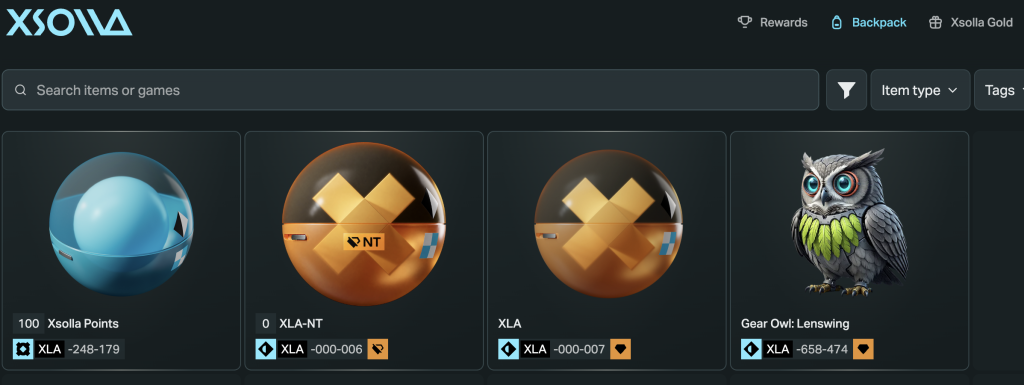
Players can get items in their backpacks and trade them. They can also go on quests, which is another part of what we announced. One thing that was missing before was what would drive players to engage. Developers can use quests to encourage engagement and reward players with digital items in their backpacks.
We see an opportunity to bring something to market that may have been tried before but didn’t work out for specific reasons. We’re not leaning into the speculative part of it. This is about utility to improve gamers’ lives.
Xsolla already has a substantial web2 business, so this is more of an additional service than the all-or-nothing bet many web3 companies were making.
That’s exactly right. We’re not 100% reliant on this, which is another difference from before. We’re introducing it for our partners and the players using their products who want this additional functionality: to expand beyond playing games into participating and owning items in those games, going on quests, and taking part in rewarded engagement and acquisition.
It’s not a speculative economy we’re trying to build, which was the approach in the past. It’s a tool to help developers engage players, build deeper relationships and re-engage lapsed players. It’s a different use case that fits within the existing businesses web2 companies are running. It gives them new functionality and removes the friction. Nobody needs to understand a lot about Web3; they can get the benefits without going too deeply into the technology.
You describe these as digital items rather than NFTs. Is the initial idea for developers to give them away as engagement rewards or badges?
We do view them as digital items, issued into the player’s backpack. Some are transferable, and some aren’t. For instance, you might have a skin that sits in your backpack but only works in one game. That’s non-transferable. Or you might have an item that can transfer between players and even between games, if multiple developers want to support a common item that benefits players.
Developers can start working together and use this to engage different player cohorts. If someone is churning out of your game, you could work with a friendly game company to move them into that game. This allows that rewarded digital-item approach.
Players can also give items to other players. So yes, I think that’s a good way of looking at it, rather than the NFT route we saw in the past. The network fees are covered by the Xsolla XLA-NT gas token, which you can get through Xsolla Gas Station.
Xsolla ZK is an Ethereum Layer 2 using ZKsync. Why launch your own blockchain, with the overhead and complexity that brings, rather than use an existing Layer 1 or Layer 2?
Speed, trust and reliability are key reasons. We also want it to be able to live on and be something agnostic that our developers can count on. We felt this was the best way to meet those needs and help our partners.
Does paying to transfer an item introduce a new point of friction? Players may find it odd to pay to send something to a friend?
Players and consumers in general are already spending credits or tokens when using different software. I’m building workflows using different AI models, and there are token usage fees involved. That concept is already out there, so I don’t think it’s something new for consumers. They’re also getting a benefit from the digital items. Hopefully, consumers aren’t necessarily paying all of those costs themselves. Developers can gift XLA-NT credits to players, and players can get them through quests.
If a brand or game runs a quest campaign, it can reward players with digital items for engaging. The backpack, XLA gas and quest system all work together. Players can also receive XLA-NT credits alongside the items, so the costs of transferring those items to friends or sharing them are already covered.
Given that Xsolla is a payments company, why have you limited the token to network fees rather than also being a payment token?
We don’t view it as a payment token. It really is utility. We see a lot of opportunity for developers and players to engage with digital items, and the benefits those can bring through engagement, retention and social activity. Players can trade and gift them, and get them through quests.
To do that in a way where players actually own the digital items, we needed to go onto blockchain. Once you’re on blockchain, you need gas to fuel those transactions. We wanted a fast, reliable gas token, and that’s why we built this. It’s all a closed loop.
We’re not looking at it as a payment token. That’s part of what failed in the past: people tried to make everything a payment token, and there was nothing there. That’s not our goal.
We already do payments through different payment providers. That’s the business we’ve built over the past 20-plus years. This is new functionality on top of that, rather than a payment system.
Having your own blockchain would also leave open the possibility of adding a stablecoin in future, if you decided that was relevant?
That’s not where our focus is. There are a lot of things that are possible with blockchain, but we’re focused on this utility part right now.
Where do you think the strongest appeal will be: collectible badges and other rewards outside the game, or usable in-game items? Will game-adjacent collectibles be compelling enough for players?
It’s going to be interesting. I understand what you’re getting at: has this been compelling in the past, and is it something gamers are interested in? Steam has items you can collect for completing achievements on the platform. There’s certainly a player type that likes to collect everything, so this will appeal to them.
I’m also interested in how our partners use it. We like to provide new products, new functionality and an initial idea of what people could do with them. Then we see what our partners actually do.
We’re giving them the opportunity to have digital items that could be interoperable within their own catalog of games. As discovery becomes more difficult, that will be a forcing function for developers and publishers to find new ways to keep players engaged, or move them between more established games and studios rather than lose them to AI slop.
I don’t have all the answers, and we never say we do. We see opportunities and build products that can take advantage of them. At the end of the day, our partners are on the front line, and they’ll figure out the best way to use this.
Just because something hasn’t caught fire before doesn’t mean it can’t work again. Our web shops are a good example. For years, people said there was no way to do anything with mobile games. We finally cracked that code and disrupted how the mobile business works.
We see an opportunity here for rewarded digital items and quests to help our partners and players. Players are increasingly looking to own things, retain items and progress across games. If a game goes away, they can still have something from that game that they own. We’ll see.
You can find out more at the Xsolla Foundation or sign up for a Backpack here.
Comments are closed.