


Kevin Rose is CMO at Alien Worlds’ developer Dacoco.
Web3 gaming promised a revolution, blending the fun of your favorite game with the blockchain tech that would make rewards irresistible.
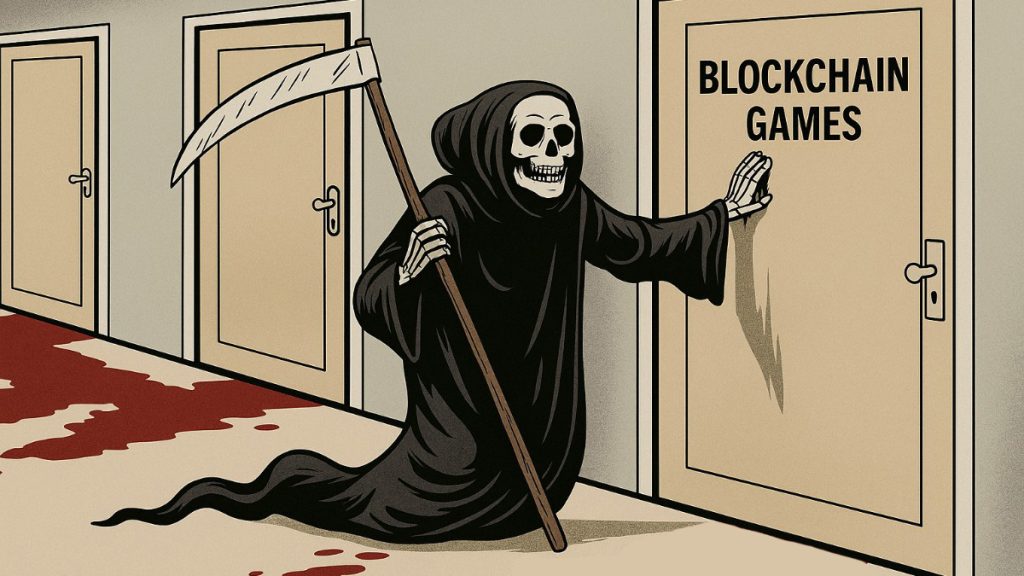
Yet reality bites hard. Despite gaming token launches jumping 200% year-over-year in 2024, the vast majority of projects die a quick death, with an average lifespan of just four months. So, why the brutal churn rate?
At the risk of making sweeping judgments, the majority of Web3 games just don’t get it. ‘It’ being the need to balance blockchain with playability. To nurture a community made up of committed gamers and crypto users interested in earning/trading tokens. And that’s not the only thing they get wrong.
Failure Factors
Perhaps the biggest cause of failure for web3 games lies with the motivations of their creators: too many focus their efforts on promoting a native token with limited utility rather than building a cool game. Projects pitched at quick-money seekers rather than legit gamers will always implode. So, too, those tethering their fortunes to the wider crypto market. In some cases, developers simply underestimate the work involved in actually building and maintaining a game.
But there are other factors, from poor UX and shallow gameplay to lousy tokenomics and low rewards. Security flaws, like those exploited by hackers to drain $615 million from the Ronin Network in 2022, are yet another impediment. Alarmingly, $400 million of this hijacked loot was owned by players of Axie Infinity, one of the industry’s few long-term success stories. On that occasion, a Binance bailout made players ‘whole’ – but the reputational damage had been done.
One persistent thorn in the side of web3 games is bots, which are deployed to take advantage of play-to-earn mechanics. Oftentimes malicious bots overrun servers, inflating metrics but undermining trust and alienating genuine users who can spot the real from the fake. Speaking of genuine users, they are few and far between in many gaming environments due to insufficient investment in community-building. No community = no game.
The ‘build it and they’ll come’ approach is ineffectual in today’s hyper-saturated attention economy.
Ultimately, the same missteps and mistakes continue to happen. Early hype fades, development costs drain budgets, VC funding dries up, tokens tank, and a mass exodus of players sounds the death knell.
The high failure rate of web3 games isn’t just a blockchain problem, though; a 2023 survey found that 83% of all mobile games fail within three years of launch, a consequence of the constant innovation and quality delivery required. The truth is, making a successful game is damn hard.
Built to last
Hard, yes; but not impossible. We need only look at projects that have flourished, including during periods of wider market turmoil. Alien Worlds is one such example.
Launched in 2020, when the Covid pandemic provoked a boom in gaming, this multi-chain metaverse started life as an NFT trading card game. Over time, though, it’s developed into a bells-and-whistles ecosystem complete with mini-games, sponsored tournaments, comics, and player-run DAOs that shape the ecosystem. Since introduced in 2022, these ‘Syndicate’ DAOs have pored over thousands of proposals submitted by the community, allocating funds to spinoff projects that enrich the game for everyone.
Interestingly, Alien Worlds has its very own grant program – Galactic Hubs – which has funded the build-out of several related games and tools by indie developers. With multiple interlinked games and lore, as well as different modes, activities (mining, staking, missions) and events, Alien Worlds has managed to keep things fresh for a player base numbering in the millions.
Splinterlands is another OG of web3 gaming. Originally called Steem Monsters, the NFT trading card game saw liftoff in 2018, soon after the first major crypto boom. With Splinterlands, players assemble and equip cards before doing battle against others, with the goal of unlocking levels and upgrading your character over time.
Like Alien Worlds, Splinterlands has refused to stand still and often incorporates new elements into the game to attract newcomers and satisfy veterans. It, too, has introduced a community DAO to amplify engagement and give players more autonomy. The reasoning is simple: those who feel a sense of ownership are more likely to keep playing. To feel emotionally invested in a project’s continued success.
Earlier this year, Splinterlands acknowledged the high fail rate of web3 games by announcing a $500k Crypto Gaming Recovery Fund, a DAO-backed initiative intended to remunerate players who had lost money playing busted games. One thing’s for sure, there’s no shortage of them.
Lessons for the future
The sheer number of failed blockchain games speaks to the difficulty of gaining traction in a competitive landscape, yet successful projects prove that it can be done. Success requires vision, an appealing core game, commitment to community-building, sustainable tokenomics, and relentless iteration to keep players onside.
The future of Web3 gaming hinges on creators embracing the challenge.

Comments are closed.