


This is a guest article from Dacoco CMO Kevin Rose.
Web3 gaming remains a relatively recent phenomenon, but there have been enough runaway hits and epic flops for one to identify a common denominator of successful blockchain-powered releases. Or rather, common denominators.
While critics overemphasize games’ reliance on the performance of its native token, the truth is that popular titles tend to thrive due to three core ingredients: community, competition, and rewards. These elements aren’t add-ons, they’re indispensable to the vitality of web3 games and critical to keeping players hooked.
As in web2 games, players like to feel as though they are part of a community, trading memes, trash talk and strategy; they crave competition to make the whole endeavor worthwhile (and to lord it over others when they win); and they appreciate the chance to earn rewards. The difference with web2 games, of course, is that such rewards exist purely in the game and are never actually owned by the player.
Let’s dive into why these three components are non-negotiable, and explore some of the projects that nail them all.
The holy trinity of web3 gaming
First, a word on why these elements benefit developers as well as players. It should be obvious, yet an alarming number of games fail to dedicate sufficient resources to meeting expectations in these areas.
- Community is the bedrock, the foundation upon which the success of any game depends. Community means people are actually playing your game; no community means no traction, no word of mouth, no path to prominence in the hyper-competitive landscape. With a strong user base, developers can better focus their marketing efforts and inspire loyalty, turning casual players into vocal evangelists.
- As for competition, this is what fires up players more than just about anything: no-one plays a game because they want to suck at it, their goal is to master the controls and surpass the achievements of their peers – ideally while having lots of fun along the way.
- In web3 games, competition is closely tied to rewards since outsmarting opponents and ascending leaderboards tends to trigger attractive bounties. Blockchain games also run more tournaments, as it provides a means by which tokens can be disbursed and participation incentivized. There are precious few examples of web3 games that don’t offer rewards, whether in the form of tradable NFTs, native tokens or other perks. A web3 game with no incentives is like a dishwasher that doesn’t clean plates. The trick is ensuring the reward flow makes sense in the context of the game’s economy.
Ultimately, these three elements create a feedback loop: community drives engagement, engagement generates competition, and competition triggers rewards.
Web3 games hitting all the right notes
Few games hit all three hallmarks as deftly as omnichain sci-fi metaverse Alien Worlds, which at nearly five years old is one of the industry’s OGs. The goal of the game is to explore planets, mine a native token (Trilium, TLM) using NFTs tools, and engage in spinoff mini-games and tournaments, all while participating in staking-based decentralized governance through DAOs. It’s a formula that’s proven incredibly popular, with the game having onboarded over 9 million lifetime players since 2020.
Where camaraderie and community is concerned, Alien Worlds goes hard by fostering intense factional rivalries between the Syndicate DAOs that rule over the game’s half-dozen planets: Discord and social channels hum with esoteric discussions relating to mining rigs, Trilium allocations, and player-led lore.
Perhaps the biggest selling point of Alien Worlds, though, is that it succeeds in creating a sense of shared ownership – not of mere NFTs or utility tokens but something much grander and more valuable: a community-built IP.
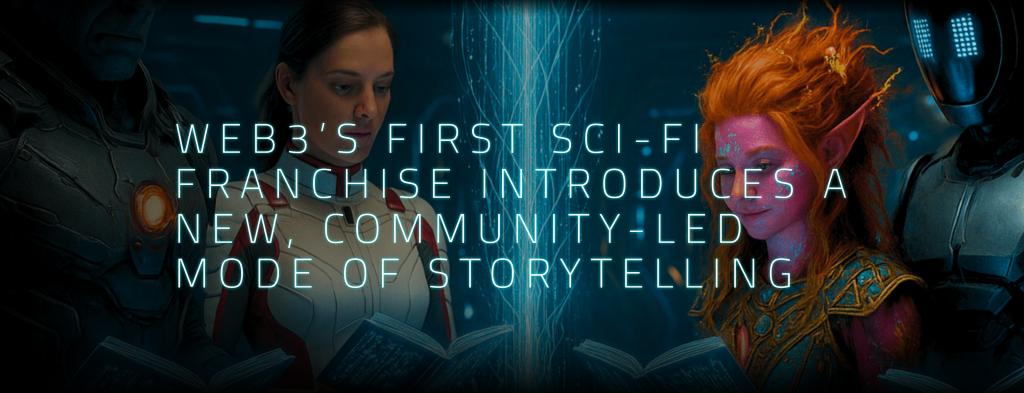
World of Dypians is another bright light in the blockchain gaming landscape. A fantasy play-to-earn MMORPG boasting over 1.5 million unique active wallets (UAWs), it compels players to compete in daily, weekly, and monthly leaderboards, earning points through quests, events, and battles against the sinister Dark Lord.
With a native token and coveted NFTs (weapons, tools, armor) serving as rewards, a native integration with BinancePay, and a highly active community, World of Dypians has quickly become one of the industry’s biggest success stories..
And then there’s KGeN (Kratos Gamer Network), an entirely different proposition that calls itself a verified distribution protocol. Ultimately, what KGeN does is empower gamers to make the most of their participation, whatever game they’re playing. To this end, it has built a Proof of Gamer (PoG) reputation system to track and verify player activity on-chain, quantifying rep based on categories like Proof of Skill, Proof of Commerce, and Proof of Social Network. Rate highly across these categories and players will obtain a favorable PoG score, with which they can earn rewards proportional to the value they bring.
With a community of over 21 million gamers, KGeN has enjoyed unprecedented success, promoting engagement through quests and campaigns and introducing a competitive dimension by motivating players to up-rank their reputation. In common with other web3 games, KGeN believes rewards should be based on merit – and its PoG system could sound the death knell for the scourge of online games: bots.
Three’s the charm
The best web3 games don’t prioritize one element over another; they weave community, competition, and rewards into a seamless whole. Projects that omit one of these ingredients jeopardise the whole recipe.
A game with a great community but weak rewards risks losing players to boredom or resentment; one with fierce competition but no social glue risks alienating them; and rewards without rivalry and camaraderie are like Monopoly money in the hands of the only player.
While blockchain games are likely to advance tremendously over coming years, not least due to advances in generative AI, don’t expect the Holy Trinity to be displaced.
For developers, the advice is simple: build a community, inspire competition, and reward the people that make your game tick.

Comments are closed.